
Google Maps Business Ratings: How Scores Are Calculated and How to Improve Your Listing's Rating
Google Maps star ratings directly affect conversion rates. According to statistics, businesses rated below 4.3 lose more than half of their calls and direction requests. However, ratings are not calculated using a simple arithmetic average. Google's algorithms take review recency and reviewer trustworthiness (Local Guides) into account. A perfect 5.0 rating can sometimes raise suspicions among users, while the optimal trust range is between 4.5 and 4.9 stars.
For consumers using Google Maps, the yellow stars next to a business name are one of the main factors in choosing where to go. If there are two coffee shops or two auto repair shops nearby, users will almost always click on the listing rated above 4.5, without even opening the other one.
However, many business owners don't understand exactly how this number is determined. Why doesn't the rating increase even slightly after five new 5-star reviews, while a single 1-star review causes it to drop immediately?
How Google Calculates Star Ratings: The Hidden Formula
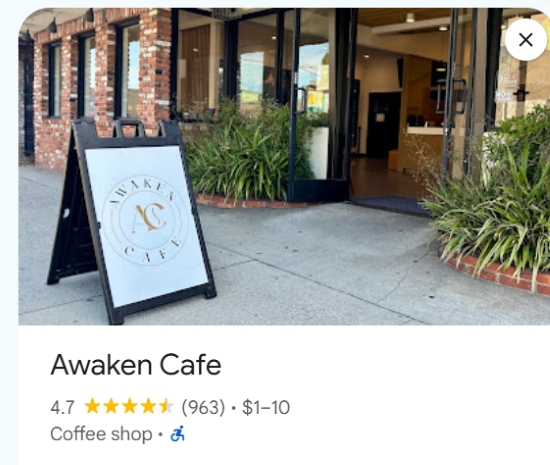
Unlike simple directories, Google Maps does not simply add up all ratings and divide the total by the number of reviews. The calculation may involve statistical modeling and machine-learning systems. Several factors can influence how reviews are displayed and how users perceive a business's rating:
- Recency - Reviews submitted in the last 3–6 months may be more relevant to potential customers than reviews from three years ago. If a business has improved its service, new positive reviews can help demonstrate those improvements to prospective customers.
- Reviewer profile credibility - Reviews from active Local Guides with an established contribution history may appear more credible to users. However, Google does not publicly disclose a formula that assigns different numerical weights to individual reviewers, and there is no guarantee that a review from a Local Guide will have a greater effect on the displayed rating.
- Text and photos - Reviews with detailed descriptions and relevant photos of the storefront, products, or receipts can provide more useful context for potential customers. However, adding text or photos does not guarantee that a review will receive additional weight in the overall rating.
Conversion Guide: How Ratings Influence Customer Decisions
| Rating Range | Typical User Perception | Potential Impact on Calls and Directions | Recommended Action |
|---|---|---|---|
| 4.9–5.0 (with >50 reviews) | Excellent reputation, although some users may question its authenticity | Potentially high lead volume | Maintain service quality and share genuine customer photos with permission |
| 4.5–4.8 | A strong trust benchmark | Potentially consistent customer interest | A good balance: genuine customers can see that the business has an established reputation |
| 4.1–4.4 | A range where customers may hesitate and compare alternatives | Potential loss of 35–45% of traffic | Introduce a consistent process for requesting honest reviews from satisfied customers |
| Below 4.0 | A high-risk reputation zone | Potential conversion decline of 70–80% | Conduct a comprehensive service audit and report reviews that violate Google's policies |
Why a Perfect 5.0 Rating Isn't Always an Advantage
Many business owners panic at the thought of receiving even a single four-star review. However, consumer psychology suggests that a profile with a rating of exactly 5.0 across hundreds of reviews can sometimes appear manipulated. Modern customers understand that every real business occasionally experiences delays, human error, or unexpected problems.
A rating of around 4.6–4.8, combined with reasonable and respectful responses from management to occasional complaints, can inspire more confidence than a flawless 5.0 accompanied by suspiciously enthusiastic, repetitive reviews.
How to Improve Your Rating After a Wave of Negative Reviews
If competitors have posted several one-star reviews or your business has experienced a service failure, follow a clear response plan:
- Check whether the reviews violate Google's policies. If a review contains profanity that violates the rules, threats, a conflict of interest (such as a review from a former employee), or other prohibited content, click the three dots next to the review → Report review. Google will assess the report, but removal is not guaranteed, and there is no fixed 3–5 business day removal deadline.
- Write a professional response to every one-star review. Don't be rude or defensive. Show that you are taking action: "We've already changed our supplier / provided additional training for our receptionist. Please contact us on WhatsApp so we can make things right and discuss an appropriate way to resolve the issue."
- Reach out to your regular customers. Identify customers who have recently used your services and invite them to share honest feedback on Google Maps using your short
g.pagelink. Make the request naturally and avoid pressuring customers or setting artificial daily review targets.
Important - Never buy fake reviews through microtask marketplaces. Google's systems work to detect suspicious review activity, including patterns that may indicate manipulation. Reviews from people in other regions or submitted through VPNs are not automatically fake, but artificial or coordinated reviews can be removed, and violations may result in restrictions on your business profile.
Monitoring and Protecting Your Business Rating
Frequently Asked Questions
Why doesn't the Google Maps rating match the simple arithmetic average of all reviews?
Google does not publicly disclose a complete formula for calculating displayed business ratings. The rating may not match a simple average because of rounding, review processing, or changes in the reviews included in the calculation. There is no publicly confirmed formula establishing that recent reviews or Local Guides' ratings receive a specific additional numerical weight.
How many positive five-star reviews does it take to offset a one-star review?
The answer depends on your current rating and the number of reviews already published. If your rating is a straightforward arithmetic average, one new one-star review can be offset mathematically by approximately four new five-star reviews to maintain the same average, although the exact number depends on the starting figures. Google Maps may display a rounded rating, and its precise calculation method is not fully public. Focus on consistently earning genuine, unbiased customer reviews rather than trying to manipulate the score.
- A Google Maps rating is an important reputation indicator, and customers should also consider review content, recency, and overall business information.
- A practical target for many local businesses is to maintain a rating of at least 4.5 stars while continuing to deliver excellent service.
- The best protection against occasional negative feedback is a consistent process for inviting genuine customers to share honest reviews every week.
Has your business listing rating dropped because of unfair reviews?
Share a link to your profile in the comments. We'll analyze the negative feedback, explain which reviews may be eligible for a policy-based appeal, and suggest ways to improve your visibility in search results.