
Using Google Business Profile with Other Google Services
Omnichannel Business Promotion
Promoting your business through a single mapping service means missing out on a significant share of its potential. You can maximize calls and sales by connecting Google Business Profile with other tools in the Google ecosystem: Google Ads (local advertising with business addresses), Google Search Console (website authority and instant verification), Google Analytics 4 (end-to-end analytics through to purchase), Merchant Center (showing in-store product availability), and Reserve with Google (online booking without phone calls).
Many companies manage their marketing channels in isolation. SEO specialists focus exclusively on the website, paid search managers run search ads, and administrators update the Google Maps listing only when they have spare time. As a result, businesses pay for three separate tools without gaining the benefits of an integrated strategy.
Google is a unified data ecosystem. When its systems detect consistent business information across all of a brand's Google services, the listing's prominence and credibility can improve significantly.
Google Ecosystem Integration Map for Local Businesses
| Google service | Integration point | Business benefits | Impact on sales |
|---|---|---|---|
| 1. Google Ads | Location Assets + Performance Max | Top placement in Maps search results, a branded square map pin, and visibility in navigation | Very high |
| 2. Google Search Console | A shared Google Workspace management account | Faster automatic profile verification and synchronization between local website pages and the Maps listing | High |
| 3. Google Analytics 4 (GA4) | UTM parameters in website links, product listings, and posts | End-to-end tracking of the customer journey from a Maps click to a purchase or phone call | High |
| 4. Google Merchant Center | Local product inventory feed | A "In stock nearby" section displayed directly on Maps | Very high (for retail) |
| 5. Reserve with Google | Integration gateway for partner CRM systems | Online appointment booking and table reservations without phone calls | Very high (for service businesses) |
| 6. YouTube | Adding videos to Google Updates and the business profile | Video demonstrations of procedures, directions to your location, and customer testimonials in local search results | Moderate |
1. Connect Your Website Through Google Search Console
One of the first things Google's search systems may check when analyzing a Google Maps profile is its linked website. If your domain is verified in Google Search Console under the same Google account that manages your business profile, this can help establish the legitimacy of your business.
How to benefit from this integration:
- Create a dedicated landing page for each business location (for example,
site.com/locations/downtown).
- Add Schema.org (LocalBusiness) structured data to the page, ensuring that the business name, address, and phone number (NAP) match your official details.
- Enter this page's URL in the main "Website" field of your Google Business Profile. Relevant content on the location page can help strengthen its relevance for searches in the surrounding area.
2. Capture Local Demand with Google Ads
Your organic business profile and Google Ads campaigns do not have to compete. Instead, they can reinforce each other:
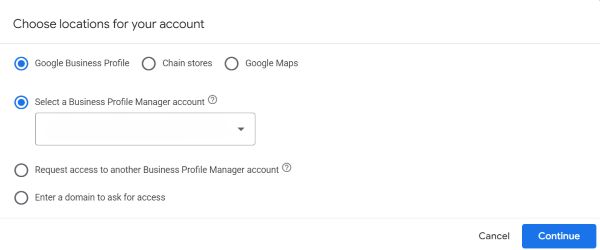
- Link the accounts through the Linked accounts section in Google Ads.
- Enable Location Assets. Your regular search ads can then display your business address, distance, and opening hours. Your business may also appear in sponsored placements on Google Maps.
- Launch a Performance Max for store goals campaign, if available for your account. Google's automated systems can help reach nearby potential customers through eligible placements across Maps, Gmail, YouTube, and Discover.
3. Track End-to-End Performance in Google Analytics 4 (GA4)
Without proper tracking parameters, traffic from Google Maps may be grouped with other Google organic traffic, making it difficult to distinguish website visitors from Maps users. Separate these traffic sources with UTM parameters -
- Main website link -
https://vash-site.ru/?utm_source=google_maps&utm_medium=organic&utm_campaign=gbp_main
- Booking button -
https://vash-site.ru/booking/?utm_source=google_maps&utm_medium=organic&utm_campaign=gbp_booking
- Product listing links -
https://vash-site.ru/product-page/?utm_source=google_maps&utm_medium=organic&utm_campaign=gbp_products
Create a dedicated report in GA4 to measure how effectively Google Maps visitors convert into submitted inquiries and phone calls.
Important - Avoid creating separate accounts for each service under different personal Gmail addresses. Whenever possible, manage the entire ecosystem (Google Business Profile, Ads, Search Console, GA4, and Merchant Center) through a single company-controlled Google account. This helps prevent access and ownership issues when marketing employees leave.
4. Display In-Store Inventory Through Google Merchant Center
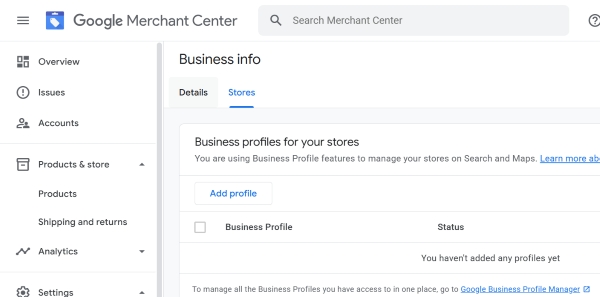
For brick-and-mortar retailers, integrating Google Maps with Google Merchant Center can make product availability more visible to nearby shoppers. By setting up a local inventory feed, eligible businesses may display an "In stock nearby" label. A customer in your area searches for a particular tool, pet food, or spare part, sees that it is available at your nearby store, and can immediately get directions.
Audit Your Google Services Integration
Frequently Asked Questions
Why connect Google Search Console to Google Business Profile?
When a company's website is verified in Google Search Console, using the same account as its Google Business Profile, the business may be eligible for automatic profile verification, depending on Google's current requirements. Consistent website information can also help Google understand the business and its local relevance.
How can Google Analytics 4 data help optimize a Google Maps listing?
With UTM-tagged links from your profile, GA4 can show which website pages visitors from Maps view, how long they stay on the site, and which services generate the most completed purchases or inquiries.
- The best results come from integrating Google ecosystem tools rather than managing your business profile in isolation.
- Google Search Console supports website verification and SEO analysis, while Google Ads can attract high-intent customers through paid placements.
- UTM parameters in GA4 help business owners measure the performance of individual profile elements, including specific posts and products.
Want to connect Google's services into a complete marketing system for your business?
Tell us your industry and website in the comments. We'll help identify which integrations are most likely to increase inquiries in your location.